Bee Doodle: Crafting Buzzworthy Design with Playful Typography
When you are building a brand identity or designing a layout, the typeface you choose does more than just display information; it sets an emotional tone. Standard serif font and sans serif font options are the workhorses of modern typography, ensuring readability for long-form text. However, when the goal shifts to grabbing attention, sparking joy, or creating a specific vibe, you need a display font that breaks the mold. Enter Bee Doodle, a creative font that swaps traditional letterforms for whimsical, hand-drawn bee illustrations. It is not just a typeface; it is a collection of design assets that brings a distinct, playful energy to any project.
The Visual Personality of Bee Doodle
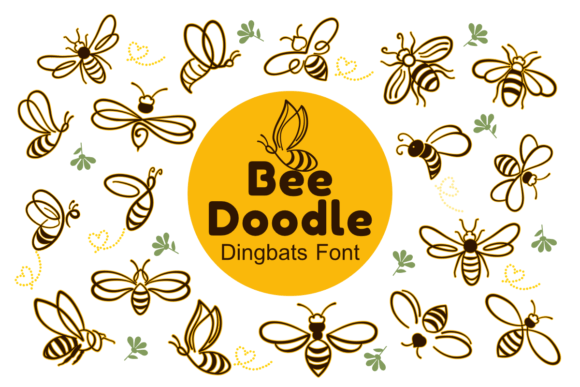
At its core, Bee Doodle functions as a dingbat font. For those unfamiliar with the term, a dingbat is a typographic ornament or character that represents a symbol rather than a letter. In the case of Bee Doodle, every key on your keyboard corresponds to a unique, cute bee-themed doodle. The style is distinctly illustrative, featuring the kind of loose, charming lines you might find in a sketchbook or a children's storybook. The bees are rendered with personality—some look busy with pollen, others are simply flying happily, and many are surrounded by flowers or swirls.
The appeal of this font lies in its texture. In an era where digital design can often feel sterile and overly geometric, Bee Doodle introduces an organic, handmade quality. It captures the essence of a handwritten font but takes it a step further by replacing alphanumeric characters with pictograms. This makes it an excellent premium font choice for designers looking to inject warmth and humanity into their work. The illustrations are generally scalable, meaning they maintain their charm whether they are used as tiny icons or blown up to fill a poster background.
Strategic Applications: Where Bee Doodle Shines
Understanding where to deploy a whimsical font like Bee Doodle is key to effective design strategy. Because it is a display font, it is rarely suited for body copy. You wouldn't write a paragraph of text using bee doodles. Instead, its strength lies in accents, headers, and decorative elements.
Branding and Packaging Design
For small business owners, particularly those in the organic, sustainable, or artisanal sectors, Bee Doodle is a goldmine. Imagine a honey producer, a florist, or a botanical skincare line. Using this typeface on packaging design can instantly communicate "natural" and "handmade" without saying a word. It works beautifully on stickers, hang-tags, and wrapping paper. When paired with a clean sans serif font for the product details, the bees become the hero of the visual hierarchy, drawing the customer's eye to the brand mark.
Digital and Editorial Design
In the realm of web design and editorial design, Bee Doodle serves as a fantastic tool for breaking up text monotony. Bloggers and content creators can use the bee characters as bullet points for lists, ornamental dividers between sections, or playful icons in the margins. It adds a layer of visual storytelling that keeps readers engaged. For social media graphics, where attention spans are short, a row of dancing bee doodles can stop the scroll and add a layer of whimsy to a marketing campaign.
Crafting and Personal Projects
The utility of this font extends beyond commercial use. For hobbyists and crafters, Bee Doodle is a practical asset for scrapbooking, greeting card creation, and DIY stationery. Because the characters are essentially vector illustrations, they can be printed at high resolutions or even used with cutting machines like Cricut or Silhouette to create vinyl decals and stencils.
Typography Pairings and Visual Hierarchy
One of the most common questions regarding decorative fonts is how to pair them. The rule of thumb with a creative font like Bee Doodle is contrast. You want the doodles to stand out, so the supporting text needs to be grounded.
A successful font pairing strategy involves balancing the playful nature of the bees with the structure of a traditional typeface. For example, if you are designing a wedding invitation for a garden party, you might pair the Bee Doodle ornaments with a flowing script font for the names and a sturdy, modern serif font for the details. This creates a visual hierarchy where the bees act as decorative framing devices, the script provides elegance, and the serif ensures the time and date are legible.
Avoid pairing Bee Doodle with other heavily stylized handwritten font options, as this can create visual clutter. The goal is to let the personality of the bee doodles breathe. When testing your font pairings, look at the "color" of the page—meaning the overall texture of the text blocks. The bees should act as punctuation marks or visual exclamation points, not as noise.
Evaluating Fit and Readability
While Bee Doodle is charming, it requires a thoughtful approach to readability and project fit. As a designer or publisher, you must evaluate the context of the message. This typeface is inherently casual and whimsical. It would not be appropriate for a corporate law firm’s annual report or a somber memorial program. However, for a children’s birthday party invite, a bakery menu, or a lifestyle brand's logo design, it is perfectly on point.
When using the font, consider the size and spacing. Because these are illustrative characters, they often look best with generous tracking (letter-spacing). Giving the bees "room to fly" prevents the design from looking crowded and allows the details of each doodle to be appreciated. Furthermore, ensure that the color palette you choose complements the style. Soft pastels, earthy tones, or bold monochromes can all work, but they will drastically change the font's final appearance.
Licensing and Commercial Use
For entrepreneurs and marketers, the legal aspect of using design assets is crucial. When acquiring a premium font like Bee Doodle, always review the licensing agreement. Most commercial fonts come with specific terms regarding how many users can install the font and whether it can be used in commercial products (like items for sale on Etsy) versus just marketing materials.
If you intend to use the bee doodles for a logo design that will be trademarked, or for merchandise that you plan to sell, you must ensure your license covers "embedding" and "commercial use." This protects you legally and ensures the font designer is compensated for their work. Do not assume that a free download site offers the same legal protections as a reputable type foundry.
Ultimately, Bee Doodle is more than just a set of pictures; it is a tool for injecting personality into design. By understanding its visual strengths and applying it with strategic intent, designers, bloggers, and business owners can create memorable, engaging, and delightful experiences for their audiences.